ARCHIVE DESTRUCTION
Records Destruction Was Operational Control
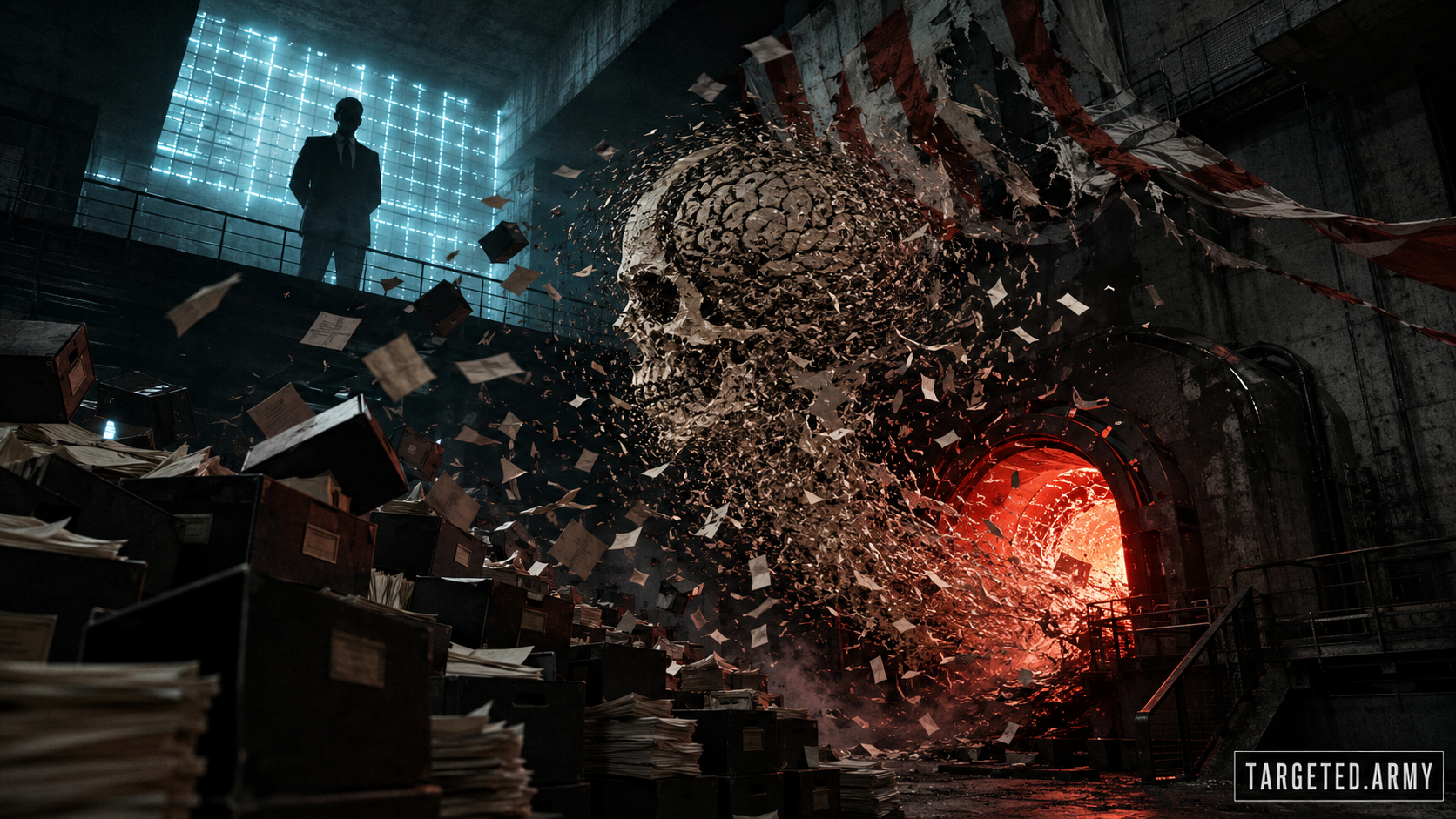
The MKUltra paper trail did not simply disappear with age. It was deliberately destroyed. In January 1973, outgoing CIA Director Richard Helms ordered the program files eliminated. Sidney Gottlieb, who had run the Technical Services Staff and directed MKUltra, carried that order through the records system. Branch files were destroyed, records held in storage were retrieved, and personal working files were later cleared from Gottlieb’s safe.
For targets and survivors, that distinction matters. A missing file can be blamed on poor storage. A destruction order is an act of control. It decides which experiments can be traced, which institutions can be named, which payments can be followed, and how much of a victim’s history will be available when the government is finally forced to answer questions.
The date commonly repeated in summaries is January 31, 1973. The CIA Inspector General’s surviving record-destruction notices point to January 30. Either way, the sequence is clear: the agency leadership knew where the files were, pulled them together, and destroyed them before the major congressional investigations of the 1970s began. The purge shaped the evidence field those investigators were later allowed to see.
SURVIVING PAPER TRAIL
Seven Boxes Escaped the Purge
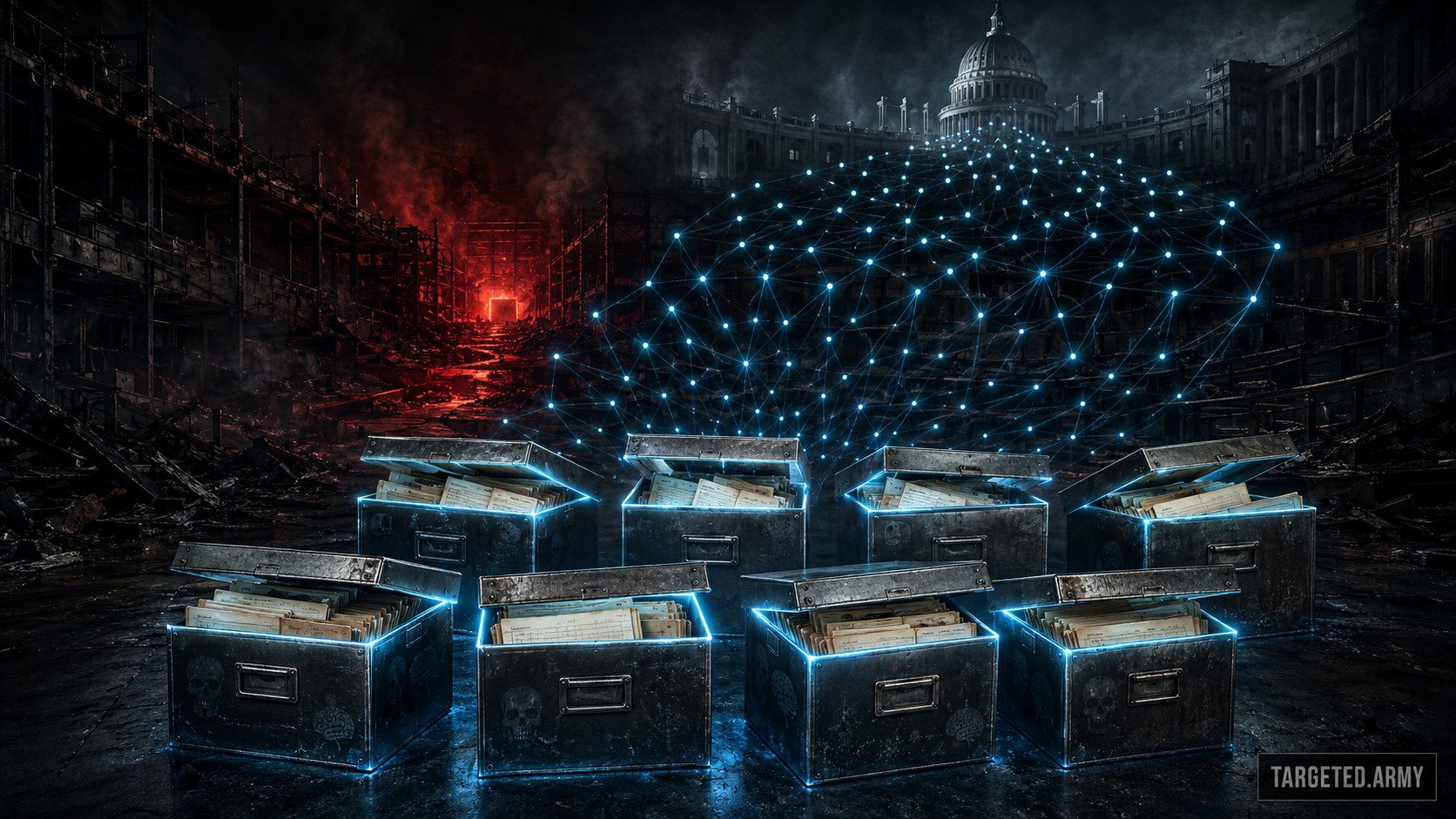
The destruction order was broad, but it was not complete. Seven boxes of MKUltra budget and fiscal records had been sent to a retired-records center in 1970. They escaped the 1973 retrieval. They also escaped the later records search performed for the Church Committee. The archive survived because one part of the bureaucracy had filed the financial trail somewhere the destroyers did not reach.
A Freedom of Information Act request led to the boxes being found in March 1977. Congress was notified in July. On August 3, the Senate Select Committee on Intelligence and the Subcommittee on Health and Scientific Research held a joint hearing to confront what the recovered records showed. Four years after the purge, Congress was not reviewing a complete operational history. It was rebuilding one from the ledgers, approvals, front organizations, and payment records left behind.
That is the part we refuse to treat as a footnote. FOIA did not produce a neat confession. It found the surviving structure. The seven boxes turned accounting records into an evidence map and forced a second public examination of a program the destruction order was supposed to bury.
CONGRESSIONAL RECOVERY
The Surviving Files Exposed 149 Subprojects
CIA Director Stansfield Turner told the 1977 hearing that the newly recovered material described 149 MKUltra subprojects. The committee record also identified 86 universities or institutions as having participated in some form. Researchers, hospitals, foundations, prisons, and other facilities appeared through a web of grants, intermediaries, and funding arrangements designed to keep the agency’s role out of view.
The categories were not narrow. The surviving index reached into drugs and alcohol, hypnosis, sleep research, psychotherapy, electroshock, polygraph work, harassment techniques, aerosols, covert delivery methods, toxins, biological materials, and other efforts to alter or measure human behavior. Financial records could not restore every destroyed protocol or identify every person used in the work, but they exposed the scale and the architecture.
Congress had to ask basic questions that intact records should have answered immediately: Who approved the work? Which institutions received money? Who knew the CIA was behind it? Which subjects gave consent? Which cutouts were used to keep investigators away from the sponsor? The purge made every one of those questions harder on purpose.
CONCEALMENT ARCHITECTURE
Sparse Records and Destruction Worked Together
The recovered archive also preserved a blunt rule from a 1963 Inspector General review: the practice was to keep no records of the planning and approval of test programs. That was not separate from the later purge. Sparse documentation reduced the paper trail while the work was active; destruction attacked what remained after the program became dangerous to defend.
Funding cutouts added another layer. A university or researcher could see a foundation or grant administrator while the CIA stayed behind the wall. When the operational files vanished, those payment routes became some of the only surviving connectors between the agency, the project, and the institution. The seven boxes mattered because money leaves a different kind of memory.
This is why TARGETED.ARMY treats custody records, destruction notices, grant files, routing slips, retired-records indexes, and FOIA correspondence as operational evidence. The archive is not only the finished report. It is the path a record took, the office that held it, the person who ordered it moved, and the point where somebody tried to make it disappear.
REBUILD THE RECORD
Turn the Missing Archive Into a Tracking System
We inherited a record that was broken before the public was allowed to see it. That means our job is not to wait for a perfect file release. We track the gaps, preserve the surviving pieces, and connect the financial and administrative trail the same way Congress was forced to do in 1977.
The purge was meant to make the story impossible to reconstruct. Seven boxes proved that even a damaged archive can reopen the entire system. We keep copies. We name the custody chain. We keep asking for the records. We do not let the paper trail disappear twice.
- Preserve the 1977 Senate hearing PDF, the 1975 Inspector General memorandum, and every related release with the original URL, download date, filename, and SHA-256 hash.
- Use the FOIA Generator at FOIA Generator to request destruction authorizations, records-center transfer lists, box inventories, retrieval slips, grant ledgers, and correspondence naming MKUltra, Sidney Gottlieb, Richard Helms, BLUEBIRD, or ARTICHOKE.
- Build an institution and subproject index. Record every alias, principal investigator, funding intermediary, location, date range, and surviving document number in one searchable ledger.
- Compare historical custody breaks with the current records conflict documented in Gabbard MKUltra Dossier Analysis. A destroyed archive and a withheld archive use different methods to produce the same public blindness.
- Duplicate the archive. Keep encrypted local copies, offline copies, and copies with trusted people so one device, office, or platform cannot erase the work again.
Primary Sources and Public Records
- Project MKULTRA, the CIA’s Program of Research in Behavioral Modification — U.S. Senate Select Committee on Intelligence and Subcommittee on Health and Scientific Research, August 3, 1977
- Destruction of Records on Drugs and Toxins — CIA Inspector General memorandum published by the National Security Archive, October 20, 1975
- CIA Behavior Control Experiments Focus of New Scholarly Collection — National Security Archive, December 23, 2024
Related TARGETED.ARMY Content
FORENSIC TRUST PACKAGE
Download the Forensic Trust Package
Keep the article, original images, source map, and integrity record together.
Article PDFComplete ZIP PackagePackage Manifest