THE COGNITIVE DOMAIN
The Target Is the Decision Cycle
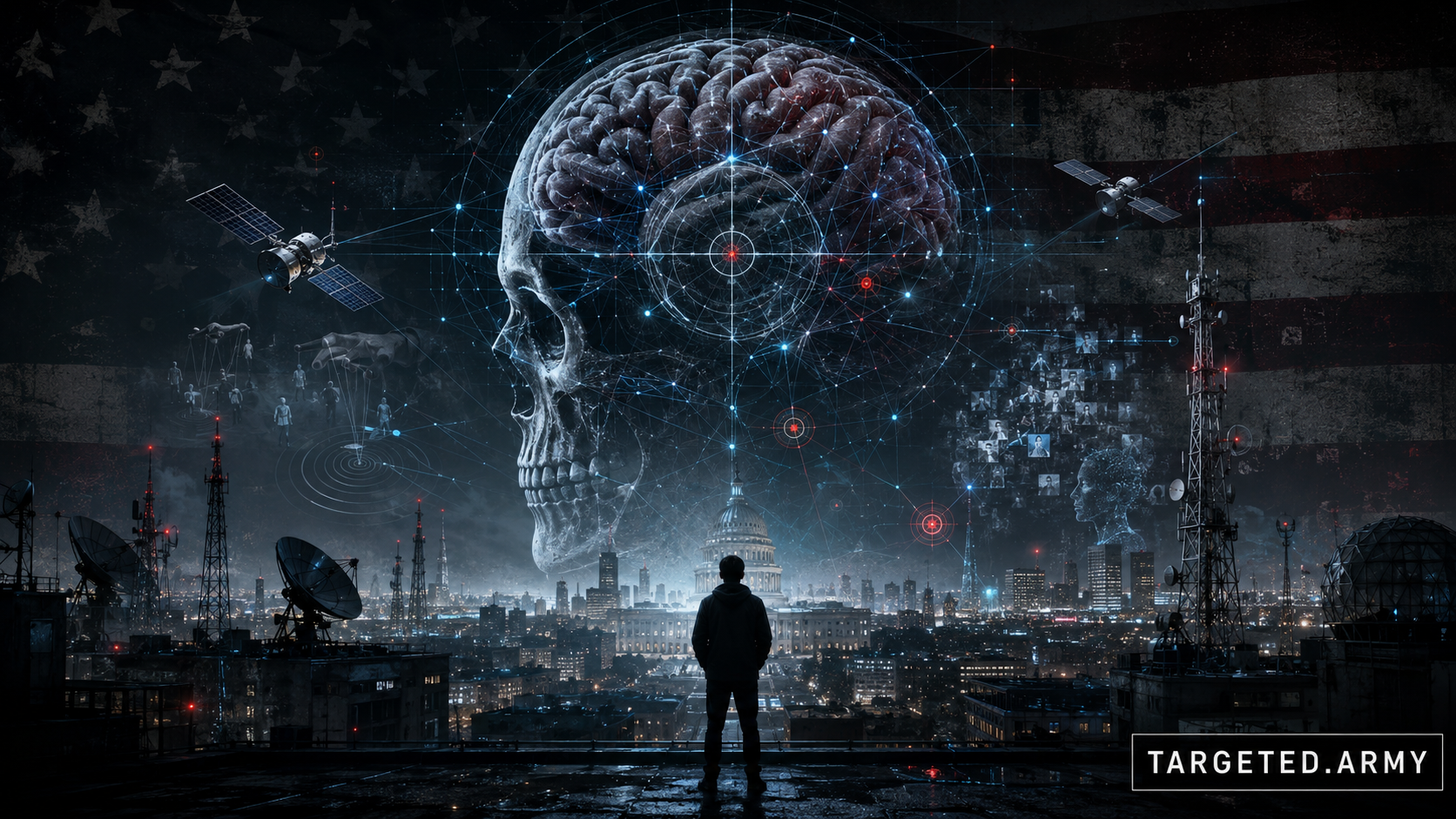
NATO doctrine now names cognition as a contested domain. The operating objective is decision advantage: shape the information environment, attack trust, exploit existing fractures, overload verification, and move a person or population toward a result selected by the campaign. Perception, attention, memory, emotion, identity, and social belonging become terrain.
The system does not need every person to believe the same story. It can win by producing paralysis, false urgency, mutual suspicion, endless internal conflict, or loss of confidence in every source. An audience denied a stable account of what happened loses the ability to coordinate a response. Confusion itself becomes an operational effect.
Cognitive warfare therefore reaches beyond propaganda. It fuses target-audience analysis, psychological operations, cyber access, platform distribution, commercial surveillance, artificial intelligence, synthetic media, and measurement. The message is only the visible surface. The architecture beneath it selects the subject, timing, channel, and pressure point.
TARGETING PIPELINE
Collection Comes Before Influence
A campaign begins by building the audience model. Location history, searches, contacts, purchases, subscriptions, workplace, health interests, political identity, religious affiliation, social conflicts, and hours of activity can be assembled from public records, platform telemetry, advertising systems, compromised accounts, or purchased datasets. The model identifies what the subject values and where pressure will travel fastest.
The next layer segments the audience. One group receives fear. Another receives status. Another receives moral outrage, isolation, ridicule, urgency, or apparent confirmation from a trusted peer. The same strategic objective can be delivered through opposite stories because the campaign is optimized for behavior, not consistency.
Document collection as part of the operation. Record which account, device, identifier, platform, broker, database, agency, or contractor could supply the input. A cognitive campaign becomes more precise as it gains access to more intimate and continuous data. Privacy loss is not collateral damage; it is targeting infrastructure.
DELIVERY STACK
Psychological Operations, Cyber Access, and AI Work Together
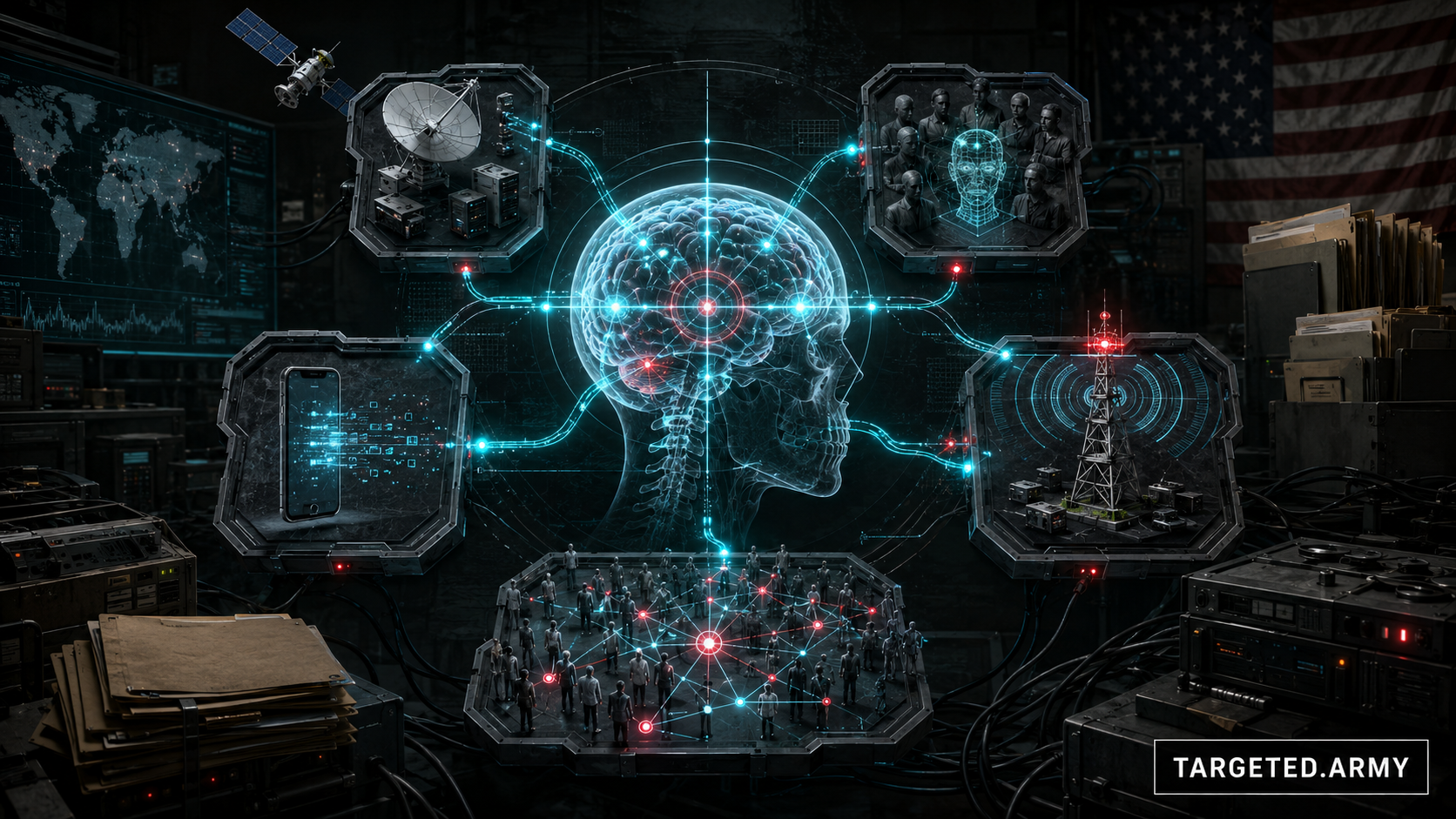
Army psychological-operations material describes target-audience analysis, influence options, coordinated actions and messages, delivery, and assessment. Cyber access expands the channel: accounts can be impersonated, correspondence exposed, feeds manipulated, trusted systems disrupted, and source material selectively released. The target experiences separate incidents while the operator sees one campaign plan.
Artificial intelligence multiplies scale. Models classify audiences, generate message variants, clone voices, fabricate images, translate narratives, direct bot networks, and score response. Recommendation systems can test a claim against thousands of small audiences and push the version that produces the strongest reaction. What once required a large team can now run as an automated loop.
Network amplification hides the origin. Coordinated accounts, influencers, paid placement, copied articles, clipped video, search manipulation, and private-message forwarding can manufacture the appearance that a narrative arose everywhere at once. The visible crowd becomes part of the weapon.
EVIDENCE ARCHITECTURE
Reconstruct the Campaign From Its Artifacts
Preserve the earliest available artifact: original post, media file, email headers, advertisement identifier, account handle, domain record, platform export, deletion notice, or witness capture. Record first appearance, later copies, exact timestamps, edits, and the route by which it reached the audience. Hash the original before annotation.
Then map coordination. Look for synchronized release times, shared hosting, reused media, identical phrasing or errors, common administrators, payment paths, account-creation clusters, platform migrations, and a change in tactics after audience response. Similar content identifies a lead. Repeated infrastructure and control relationships reveal the operation.
Measure reach and effect separately. Impressions, reposts, automated accounts, and distribution speed show delivery. Changed policy, disrupted meetings, recruited participants, altered routines, financial loss, or coordinated action show effect. When the campaign targets one person, document the same separation: what was delivered, what was observed, what changed, and how the next cycle adapted.
COUNTER-OPERATIONS
Take Back the Record Before the Narrative Hardens
Cognitive defense is not passive media literacy. It is counter-operations built around provenance, timing, access, and control. The campaign wants the audience trapped inside its emotional tempo. A verified chronology breaks that tempo and forces attention back onto the system that created the conditions.
Read Behavioral Modification Explained for the feedback-loop mechanics, Your Digital Shadow for the surveillance inputs, and Privacy Is a Human Right for the human boundary this doctrine attacks.
- Capture original artifacts and timestamps before accounts, posts, or pages disappear.
- Map actors, narratives, infrastructure, channels, funding, effects, and unanswered questions as separate Maps nodes.
- Use the File Explorer to retain primary files and the My Story to align incidents with the campaign timeline.
- Use the FOIA Generator for contracts, policies, threat assessments, platform communications, procurement, legal reviews, and after-action records.
- Publish corrections with the source record attached, not as another unsupported assertion in the same stream.
Primary Sources and Public Records
- Cognitive Warfare - NATO Allied Command Transformation, Accessed July 19, 2026
- Chief Scientist Research Report: Cognitive Warfare - NATO Science and Technology Organization, 2023
- Cognitive Warfare: Strengthening and Defending the Mind - NATO Allied Command Transformation, April 5, 2023
- Psychological Operations Branch - U.S. Army, November 19, 2024
Related TARGETED.ARMY Content
FORENSIC TRUST PACKAGE
Download the Forensic Trust Package
Keep the article, original images, source map, and integrity record together.
Article PDFComplete ZIP PackagePackage Manifest