MAP THE CYCLE
Synthetic insomnia reports become testable when every waking event is tied to one clock
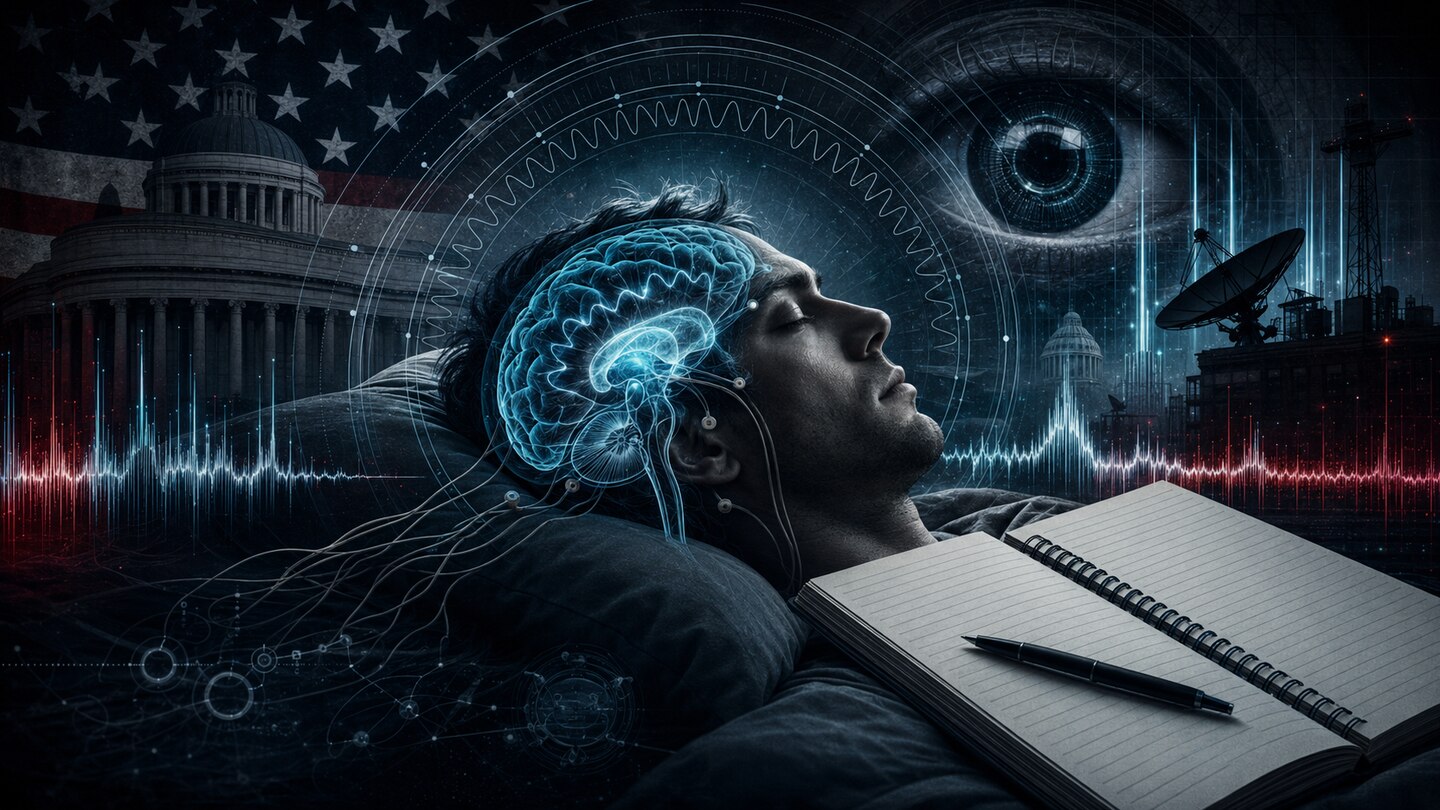
Synthetic insomnia is the community term for sleep disruption experienced as externally triggered, automated, and deliberately timed. Reports describe abrupt waking at repeating intervals, pressure or sound before waking, adrenaline on awakening, or exhaustion that intensifies over several nights. The first objective is to convert that experience into a synchronized timeline.
Use one reference clock for the sleep log, audio, environmental sensors, wearable exports, and cameras or spectrum instruments. Record lights-out, estimated sleep onset, every remembered awakening, duration awake, sensation, body position, room, and final rising time. A repeated interval across nights establishes the operational pattern the investigation can test against synchronized field data.
REM MUST BE MEASURED
Combine cyclical waking with sleep-stage measurements to document REM deprivation
Rapid eye movement sleep is a physiological stage defined through EEG, electro-oculography, and electromyography. Consumer wearables estimate stages through movement and optical pulse data; preserve the device labels alongside make, model, firmware, and raw exports, while clinical polysomnography supplies the strongest sleep-stage record.
Build the REM-deprivation record from repeated awakenings during verified or consistently estimated REM windows, reduced REM across nights, and sleep-lab findings where available. Pair those measurements with the exact operational observations: abrupt cyclical waking, shortened sleep, repeated late-night awakening, and nonrestorative sleep.
- Preserve device make, model, firmware, fit, battery state, and raw export
- Log heart rate, heart-rate variability, temperature, movement, and sound
- Record caffeine, alcohol, medications, pain, illness, apnea symptoms, and room conditions
ELF GRID SPIKES
Frequency labels become evidence through amplitude, geometry, bandwidth, and instrument response
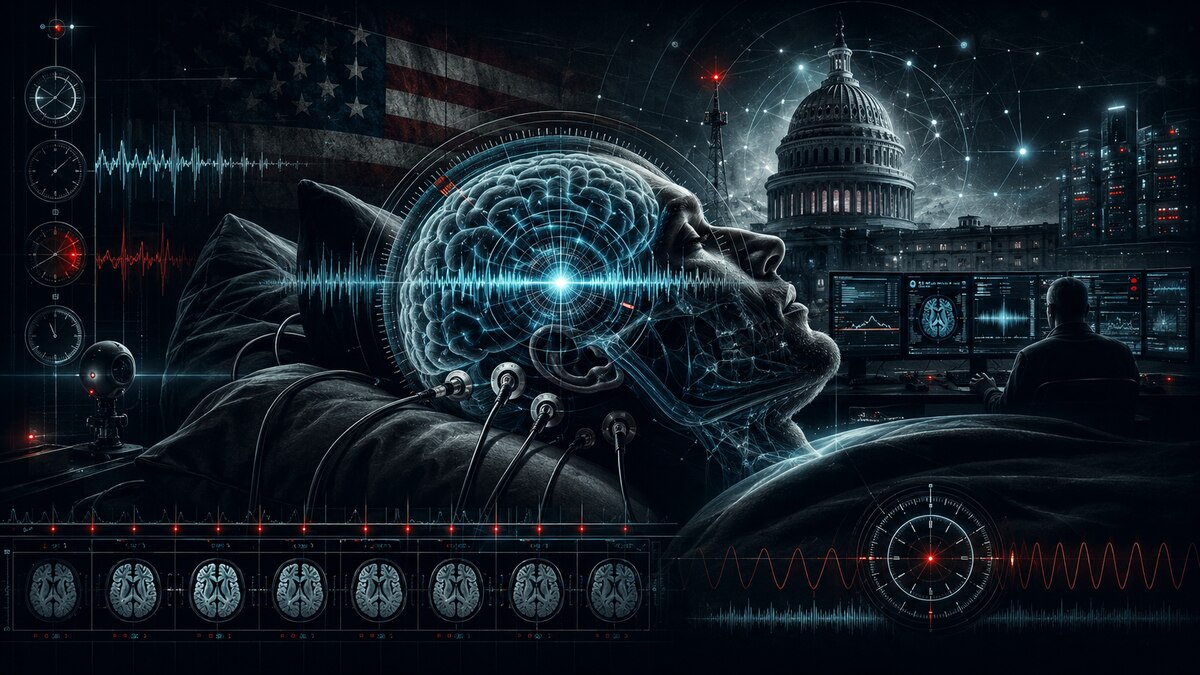
Extremely low frequency commonly refers to fields below 300 hertz. The label covers power systems, appliances, motors, wiring faults, transportation equipment, natural activity, laboratory exposures, and proposed stimulation methods. Power-frequency lines, harmonics, and switching noise provide a mapped background against which repeating anomalies can be isolated.
Studies examining defined ELF or RF exposures and changes in EEG activity or sleep measures identify the parameters investigators can compare against reported grid spikes. Record magnetic or electric field amplitude, axis, sample rate, sensor bandwidth, placement, calibration, and raw time series, then align those traces with every precisely timed awakening.
RUN A NIGHTLY PROTOCOL
Change one known condition at a time and predefine the waking windows
Before reviewing the next night, write expected windows based on the earlier pattern with a defined tolerance. This prevents the analysis from moving the target after every awakening. Keep sensors fixed, photograph position, and record electrical loads, HVAC cycles, charging, Wi-Fi schedules, street lighting, storms, and power disturbances.
Compare nights, rooms, and control conditions only when safe. A recurring field change before awakening is more useful than one appearing randomly. Replication with an independent sensor matters. A peak found after filtering must be accompanied by unfiltered data and the processing settings used.
PROTECT THE PERSON
Severe sleep deprivation is an injury risk, not a test of endurance
Sustained sleep loss impairs attention, mood, memory, reaction time, cardiovascular function, and judgment. Do not stay awake intentionally to improve a log, drive while dangerously sleepy, or run unsafe electrical experiments beside a bed. Schedule review periods so investigation does not become another source of sleeplessness.
Bring a one-page timeline, wearable exports, medication list, witnessed events, and the most repeatable environmental correlation to a sleep clinician. Ask whether polysomnography, apnea testing, medication review, neurological evaluation, or another study can document the disruption.
- Seek urgent help for confusion, collapse, chest pain, inability to remain safe, or thoughts of self-harm
- Keep raw sleep and field data private
- Separate verified sleep stage, device estimate, direct observation, and TARGETED.ARMY analysis
Primary sources and technical records
- Brain Basics: Understanding Sleep — NINDS (2025)
- Alterations of Human EEG Activity Caused by Multiple ELF Magnetic Field Exposures — PubMed (2009)
- Radiofrequency Electromagnetic Field Pulses Affect Sleep-Dependent Performance — PubMed (2013)
- About Sleep — CDC (2024)