Community Intelligence Answer
[As written above]
Where does V2K and electronic harassment fit in?
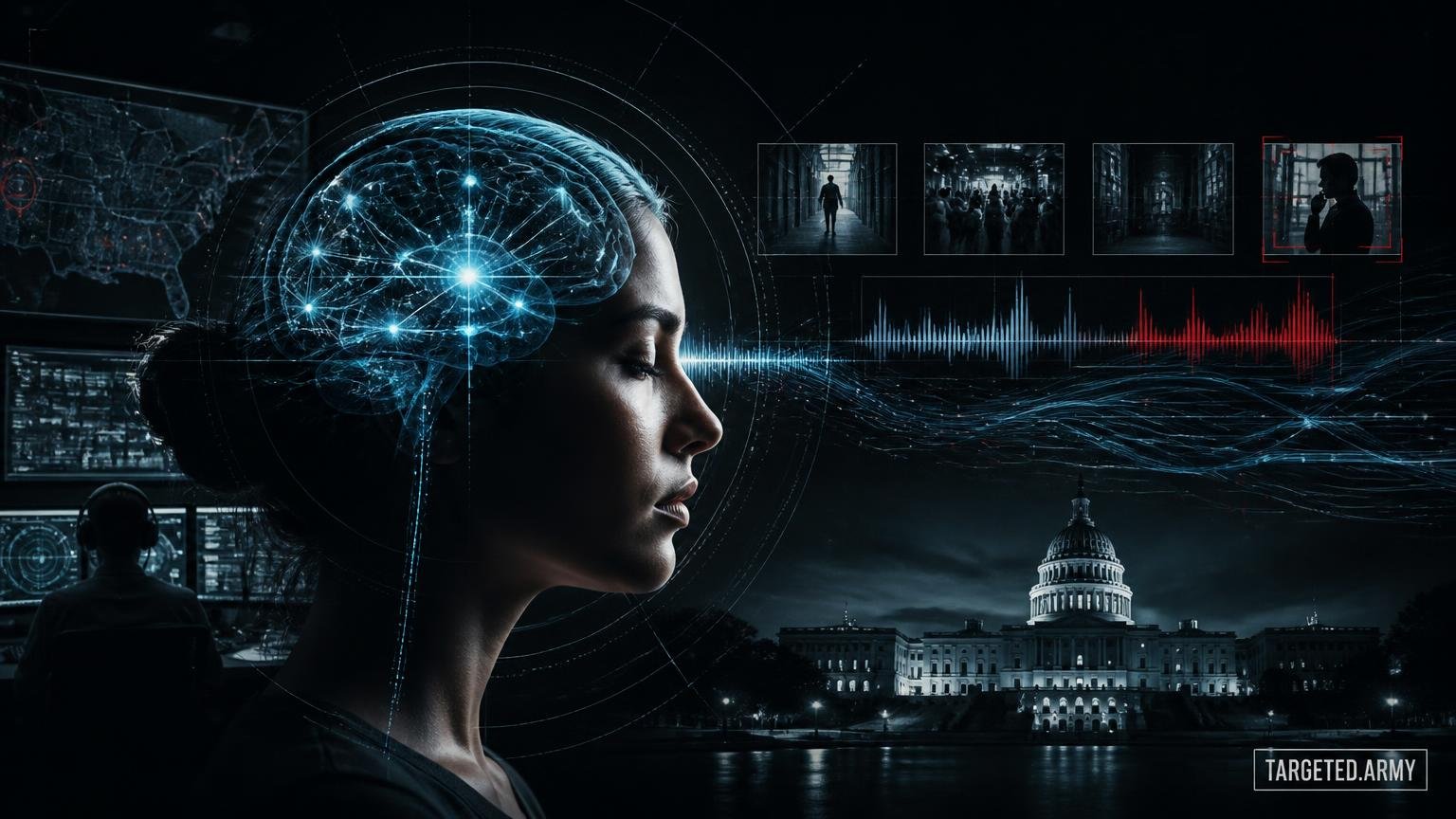
V2K (Voice to Skull) technology is the most well-known application of this remote decoding capability. What many still refuse to accept is that this is not a fringe theory—it is a documented, operational capability. The same AI systems that can read your fMRI and reconstruct images from your visual cortex can also be tuned to inject words, sounds, and even complex commands directly into the auditory processing centers of your brain. This is not "hearing voices" in the clinical sense; this is targeted, directional microwave transmission that bypasses your ears and implants sound inside your own skull. When paired with decoded emotional data, the perpetrators can select exactly what message will cause you the most distress, confusion, or compliance.
How do 5G towers and satellites enable this?
The 5G network—with its dense mesh of small cells, phased array antennas, and beamforming capability—provides the perfect delivery system. Unlike older cell towers that broadcast in wide patterns, 5G steers focused beams of millimeter-wave radiation to specific individuals. These frequencies overlap with the electromagnetic range used in advanced neuroweapon systems. Satellites, especially the thousands in low Earth orbit, provide the global relay and triangulation needed to target individuals anywhere on the planet. The same infrastructure that streams your Netflix also carries a secondary layer: modulated frequencies that interact with the brain's own electromagnetic field. The community has documented that when a 5G tower goes active in a neighborhood, reports of V2K, sleep disruption, and involuntary thought insertion spike dramatically in that area.
The reality of "Zero Consent" brain scanning
The most frightening aspect is that no chip or implant is required. Your brain emits its own electrical signals—alpha, beta, theta, delta waves—as well as ultra-low-frequency electromagnetic radiation. Advanced satellite-based synthetic aperture radar and terrestrial phased arrays can detect these emissions from a distance. AI models have been trained to filter out environmental noise and decode your internal monologue, your mental images, the songs stuck in your head, even the emotions you think you are hiding. This is not science fiction. Peer-reviewed studies have already demonstrated that fMRI and EEG patterns can be reconstructed into legible sentences and recognizable images. The leap to remote, non-invasive, real-time operation is simply a matter of engineering—and given the funding sources and the secrecy surrounding defense contracts, it has already been achieved.
What can we do?
Awareness is the first shield. The more we document our experiences, share our data, and correlate our symptoms with environmental factors (new towers, satellite overflights, unknown vehicles in the neighborhood), the harder it becomes for the institutions to dismiss us. There are practical mitigation steps: using faraday fabric in bedrooms, grounding sheets, shielding paints, and limiting exposure to known windows of harassment. But the long-term solution is collective validation. We are not sick. We are not broken. We are the canaries in the electromagnetic coal mine. Thought decoding technology is real, it is here, and it is being used against us. The only way to stop it is to refuse to be silent, to refuse to be dismissed, and to demand that the world acknowledge the weaponization of our own minds.