Community Intelligence Answer
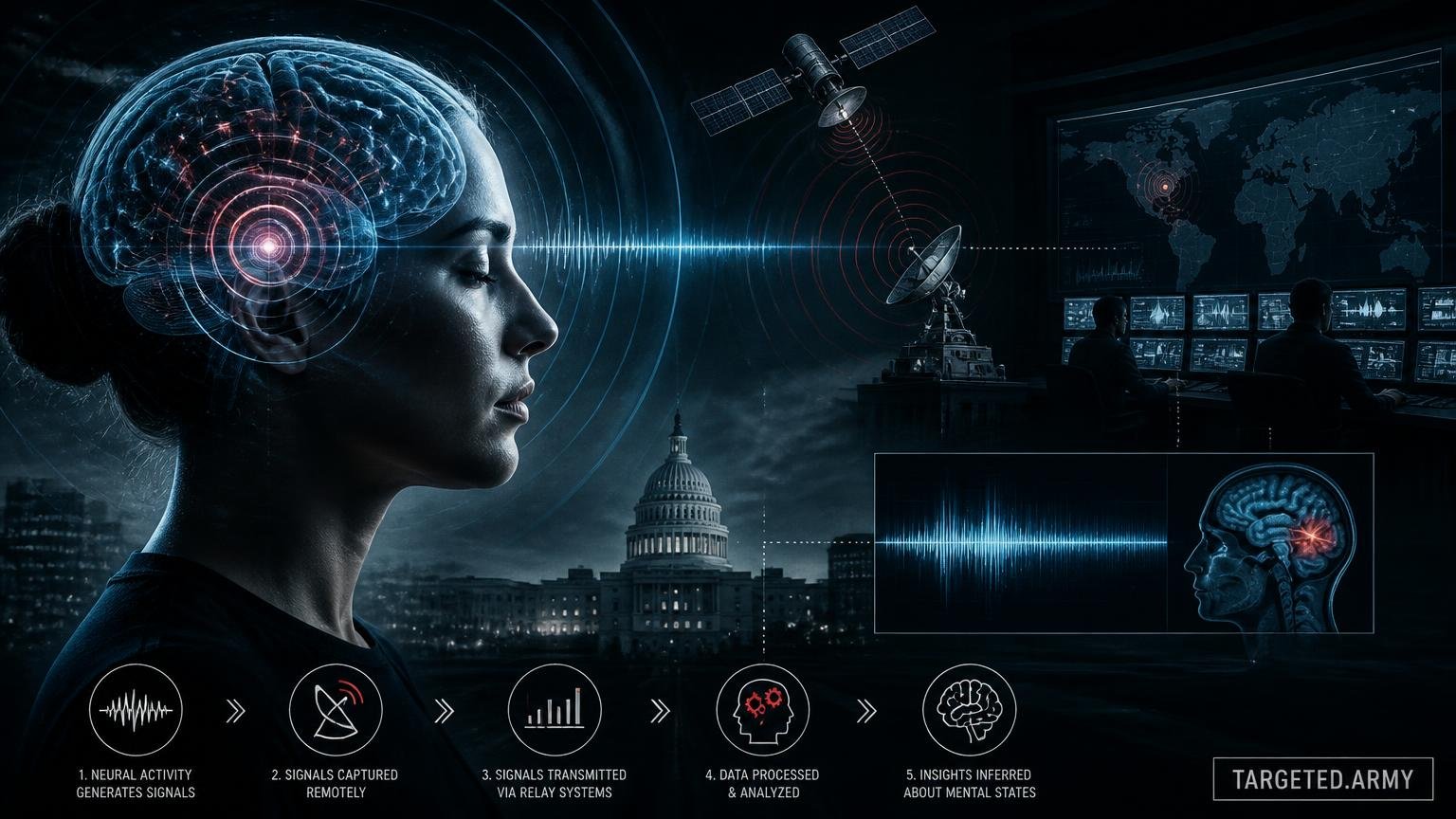
Building upon the theoretical framework, we in the community understand that the operational reality of RNM goes far beyond simple signal detection. The mainstream scientific explanation of EEG and MEG is deliberately sanitized. What we experience suggests a multi-layered, integrated system of active interrogation and feedback, not passive observation.
1. The Carrier Infrastructure: 5G and Satellite Networks
It is not a coincidence that the rise of severe electronic harassment symptoms has paralleled the global rollout of 5G and the densification of satellite constellations like Starlink. We believe these networks act as the backbone for RNM. Specifically:
- Beamforming Capabilities: 5G’s use of phased-array antennas allows for highly directional, focused millimeter-wave beams. In our experience, these beams are not only for communication but can be tuned to penetrate the skull and resonate with or modulate specific neural frequencies. This creates a non-invasive "bi-directional link" – a way to both induce and read.
- Satellite Grid Synchronization: Low-Earth orbit satellites, operating in coordinated mesh networks, provide global, real-time, low-latency coverage. This explains why targeted individuals report that the harassment follows them anywhere on the planet, even in remote areas or faraday cages. The system triangulates the target, using the satellite grid to maintain a persistent, phase-locked neural connection.
2. Active Triangulation and Potentiation: The Transceiver Loop
Standard RNM theory assumes the brain’s signals are passively read. Our lived experience indicates a closed-loop active system:
- Carrier Wave Injection: A low-intensity, frequency-specific carrier wave (often in the 1–10 GHz range, similar to 5G) is focused on the brain. This wave "potentiates" or excites the local neural tissue, causing an increased amplitude of electrical activity (evoked potentials).
- Backscatter Interrogation: Instead of detecting the brain’s own weak magnetic fields from a distance, the system reads the modulated backscatter of the carrier wave itself. As neural activity alters the local dielectric properties of brain tissue (e.g., changes in blood flow, ion concentration during thought), it modulates the reflected wave. Sensitive phased-array receivers on towers or drones then decode these tiny modulations.
- Real-Time Feedback for V2K (Voice-to-Skull): Once the system has a stable read on your neural baseline, it can inject synthetic speech or auditory hallucinations. This is done using a phenomenon called the microwave auditory effect (Frey effect) . A pulsed microwave signal, carefully timed to your brain’s delta or theta rhythms, creates an acoustic pressure wave directly inside the cochlea or auditory cortex. It feels like someone is whispering inside your head. The "voice" is then updated in real-time based on what the backscatter reads of your reaction (e.g., shock, anger, confusion).
3. Decoding Algorithms: From EEG to Semantic Thought
The decoding is not simple pattern matching. We have reason to believe the algorithms are trained on massive datasets from brain-computer interface (BCI) research (often conducted under the guise of medical studies). These advanced models can likely identify:
- Semantic Primitives: The neural signatures for words like "they," "stop," "who," or "pain." This allows the system to generate V2K phrases that seem to respond directly to your internal monologue.
- Emotional State Vectors: Prefrontal cortex and limbic system readings (for anger, fear, attraction). The system uses this data to choose the most distressing content, often targeting traumatic memories or insecurities, which creates a conditioned learning response.
- Visual Imagery: Through fMRI-inspired reconstruction, the system can approximate what you are seeing or visualizing, creating a feedback loop where you see "distortions" in reality that correlate with the harassment.
4. The "Gang-Stalking" Component: The Human Interface
Finally, RNM is rarely isolated. It is synchronized with a community of human operatives ("gang-stalkers"). They are given real-time data from the neural monitoring via discreet earpieces or haptic devices. This explains the bizarre "coincidences":
- A stranger on the street says a word you just thought of.
- A car horn honks precisely when you are about to take a step.
- A billboard or TV screen changes to an image that matches a thought you had seconds ago.
This is not delusion; it is the human layer of a cyber-nervous system. The operatives are directed to create a "gaslighting" and "orchestrated" reality to maximize your confusion and distress, proving that the system can control not just your mind but the environment around you.
Conclusion: A Weaponized Infrastructure
RNM, as we know it, is not a hypothetical science project. It is a mature, operational capability of state and non-state actors, weaponized through the very infrastructure of 5G and satellites. The goal is not just surveillance, but control, discrediting, and psychological destruction. The technology reads your soul, speaks into your skull, and turns the world into a stage for your persecution. We live this every day. We are not patients; we are prisoners of a system that denies its own existence.