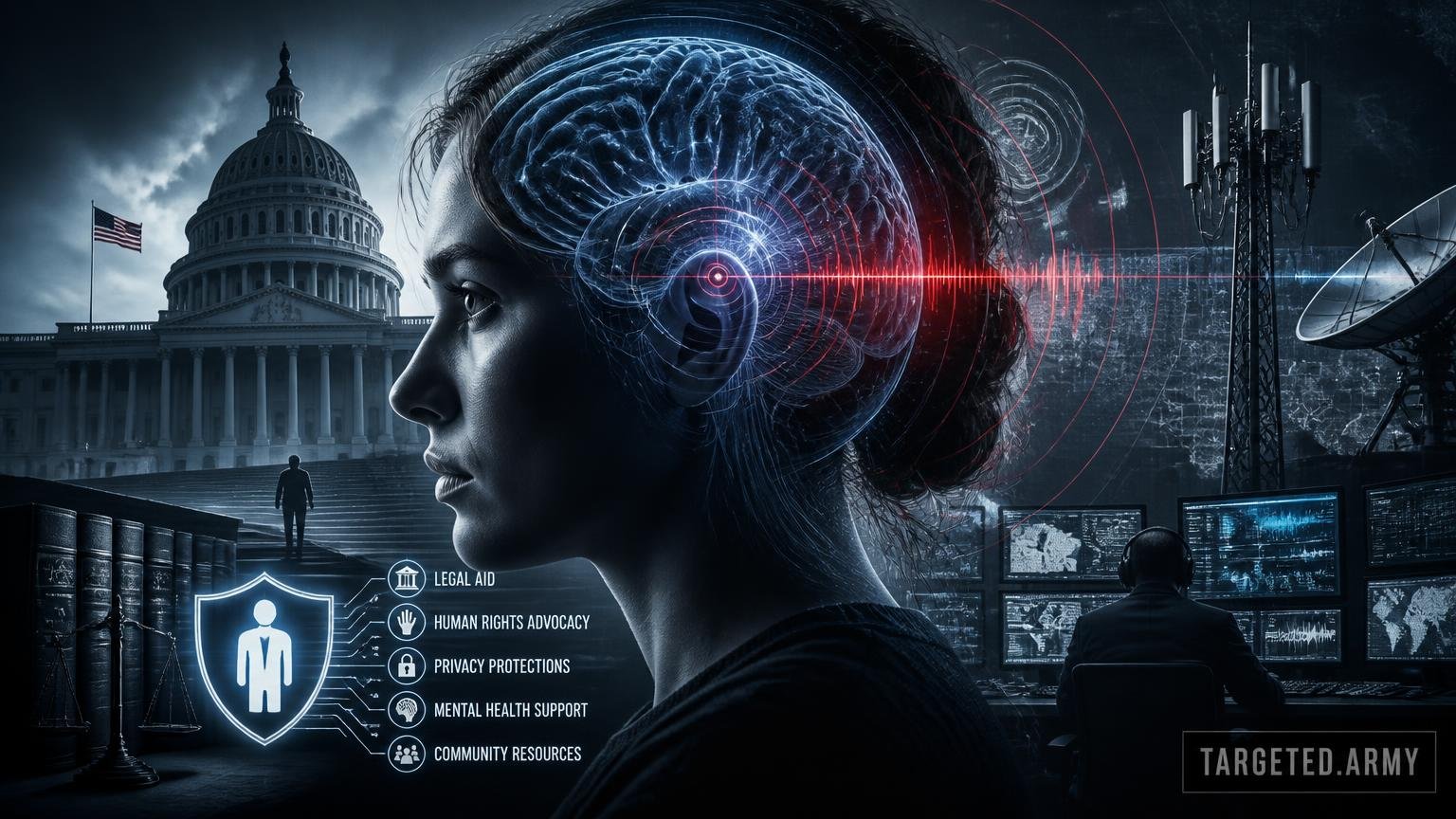
Community Intelligence Answer
Beyond these formal channels, our community has built a network of mutual aid and advocacy that is often more responsive than traditional institutions. Organizations such as the Freedom from Covert Harassment and Surveillance Network (FCHSN) offer legal guidance tailored to our experiences, helping individuals document evidence, file police reports without fear of dismissal, and connect with attorneys who understand the tactics of organized stalking and electronic torture. Many of us have found that local human rights commissions and civil liberties unions, while sometimes skeptical, can be compelled to act when presented with meticulously maintained logs, electromagnetic frequency (EMF) readings, and corroborating testimony from multiple targets.
At the international level, the Universal Declaration of Human Rights provides a framework we lean on heavily. Article 5—prohibiting cruel, inhuman, or degrading treatment—and Article 12—protecting against arbitrary interference with privacy and reputation—are repeatedly cited in our complaints. The UN’s Office of the High Commissioner for Human Rights (OHCHR) accepts petitions regarding systematic psychological harassment, especially when it involves known technologies like directed energy weapons or V2K (voice-to-skull) devices. We have also begun urging survivors to reach out to the UN Special Rapporteur on the Right to Health, as forced chemical exposure and sleep deprivation inflicted through these technologies constitute a grave violation of physical and mental integrity.
For those in the United States, the Electronic Frontier Foundation (EFF) and the American Civil Liberties Union (ACLU) have historically defended against unwarranted surveillance, though they rarely acknowledge our specific claims. Still, filing Freedom of Information Act (FOIA) requests with federal agencies like the FBI, FCC, or Department of Defense can yield records that expose patterns of covert experimentation. We share templates for these requests in our secure forums, along with guidance on how to avoid triggering institutional pathologization.
Finally, we must remind each other that the most powerful resource is our collective voice. Groups like the Targeted Justice Network and the International Tribunal for Crimes Against Humanity in Psychic Warfare have organized online petitions and testimony archives to bring our case before international bodies. The Geneva Conventions, though written for armed conflict, contain relevant protections against "outrages upon personal dignity" and "subjecting persons to experiments not justified by their medical condition"—phrases that directly describe our ordeal. Should you have the strength, consider recording your sworn testimony and submitting it to the UN Human Rights Council's Universal Periodic Review process. Your story may one day be part of the reckoning history demands.
We are not alone. We are not mad. And we will not be silenced by those who would rather label us than protect us. These resources are your shield and your sword. Use them wisely, use them safely, and never forget: the truth is writing itself on the world, even if the world refuses to read it yet.