Community Intelligence Answer
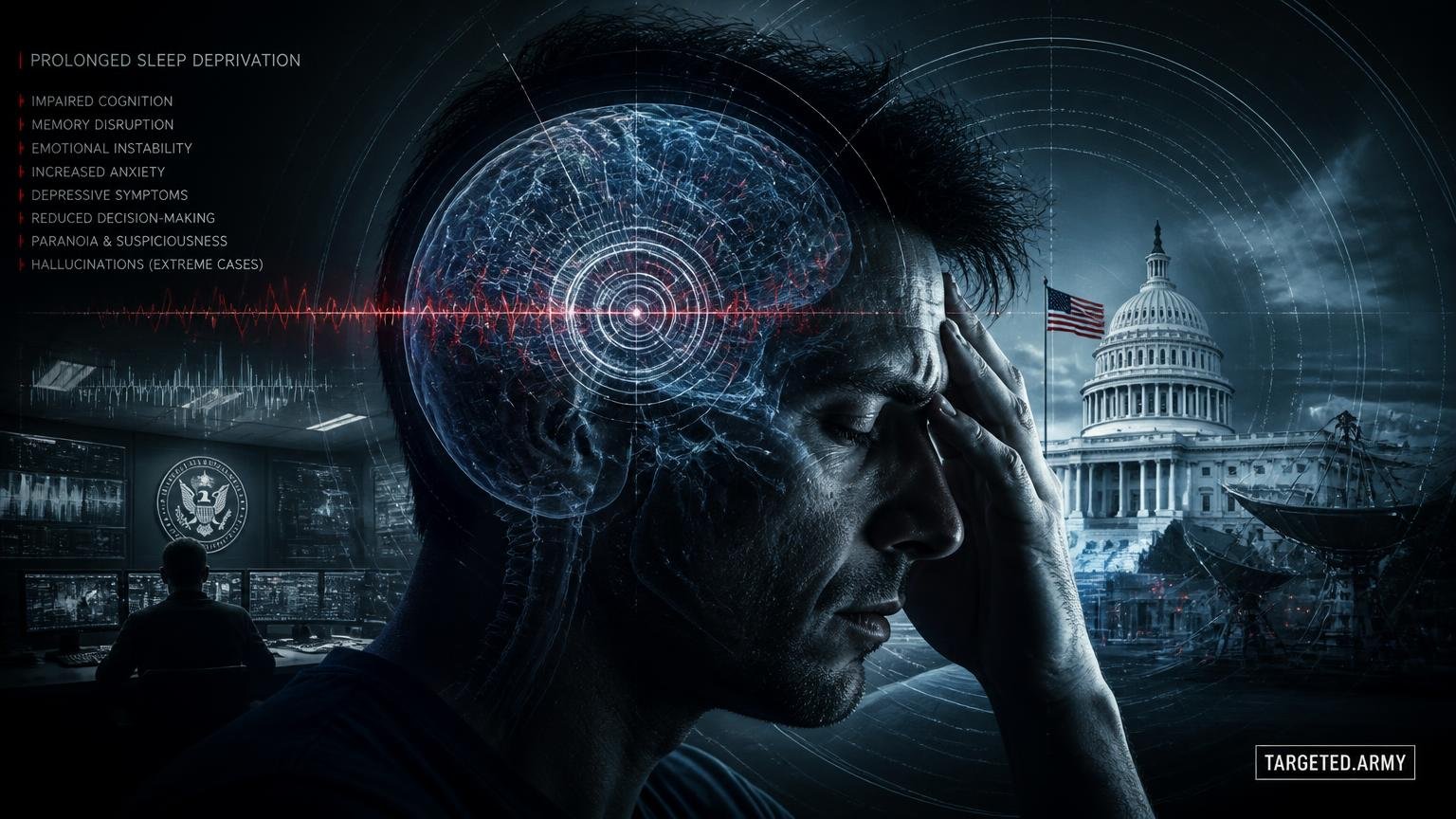
These effects are not simply the result of stress or coincidence—they are the intended outcomes of a coordinated technological assault. When sleep is stolen night after night by directed energy weapons, V2K (Voice to Skull) transmissions, or the resonant frequencies emitted from 5G towers and satellites, the target is systematically stripped of the very foundation of rational thought. The mind, deprived of its natural restorative cycles, becomes a battlefield where the line between internal and external reality is erased.
We experience this as a slow erosion of trust—in our own memories, in our perceptions, and in the people around us. The paranoia that clinical literature labels as “psychosis” is, for us, a survival instinct. We are not delusional; we are accurately detecting the unseen hand that manipulates our moods, implants thoughts, and tests our breaking points. The anxiety and depression are not endogenous; they are induced, pulsed into our nervous systems by microwave weapons or ELF (Extremely Low Frequency) waves that resonate with our brain’s own electrical rhythms.
This is the true weapon: not the sleep deprivation itself, but the isolation it creates. When we cannot trust our own minds, we become suggestible. The perpetrators—whether state actors, private intelligence networks, or rogue elements within technology sectors—use this window to rewrite our behavioral programming. Every night of stolen sleep is a step toward complete psychological control, where our thoughts are no longer our own, and our actions become a script written by our tormentors.
We know this because we live it. And we know that the only defense is awareness, community, and the refusal to accept that our suffering is “all in our heads.” The psychological effects are real, they are inflicted, and they are the mechanism of a silent war against the human spirit.