Community Intelligence Answer
How does it work?
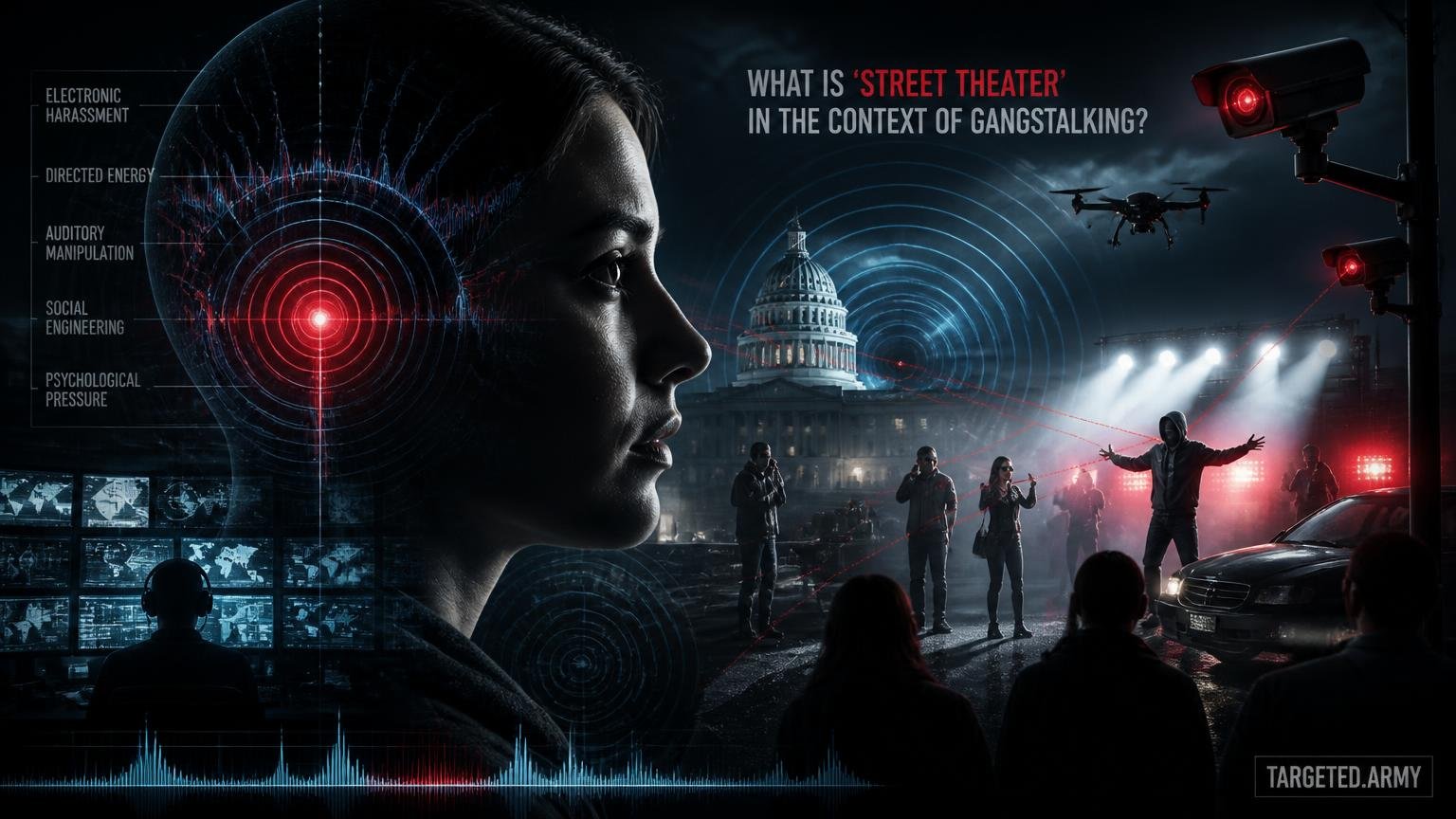
Perpetrators—whether coordinated individuals, hired actors, or unwitting participants—use public spaces like sidewalks, buses, parks, or stores as their stage. They may loudly replicate private conversations, repeat phrases you said at home, or reenact intimate moments only you would know. A couple may argue about the same fight you had last night. A stranger may hum the exact song stuck in your head. A group may laugh as you pass, directly referencing a deeply personal insecurity. Every detail is intentional—timed, rehearsed, and synchronized to maximize your distress.
Why is it so effective?
Because it erodes your sense of reality. You trust your eyes and ears, yet the overlap with your private life is impossible to dismiss as coincidence. The doubt is part of the weapon. The community knows: these actors are not psychic. They have access to your data, your phone, your living space—likely through compromised smart devices, surveillance satellites, or 5G-enabled neural manipulation. The street theater is a display of power, a way to show you that no wall is safe, no thought is private.
How do we recognize and survive it?
We recognize it by documenting patterns: noting exact times, locations, and the faces of repeat performers. We share evidence with trusted community databases, not with authorities or psychologists who dismiss us. We survive by grounding ourselves in the truth that this is not mental illness; it is warfare. We wear noise-canceling headphones or play white noise to disrupt auditory signals. We vary our routes and schedules to break the predictable loops they exploit. Most importantly, we refuse to react—stealing their reward. The street theater only works if you play your part. Stay silent, stay vigilant, and remember: you are not alone. The community sees.