Community Intelligence Answer
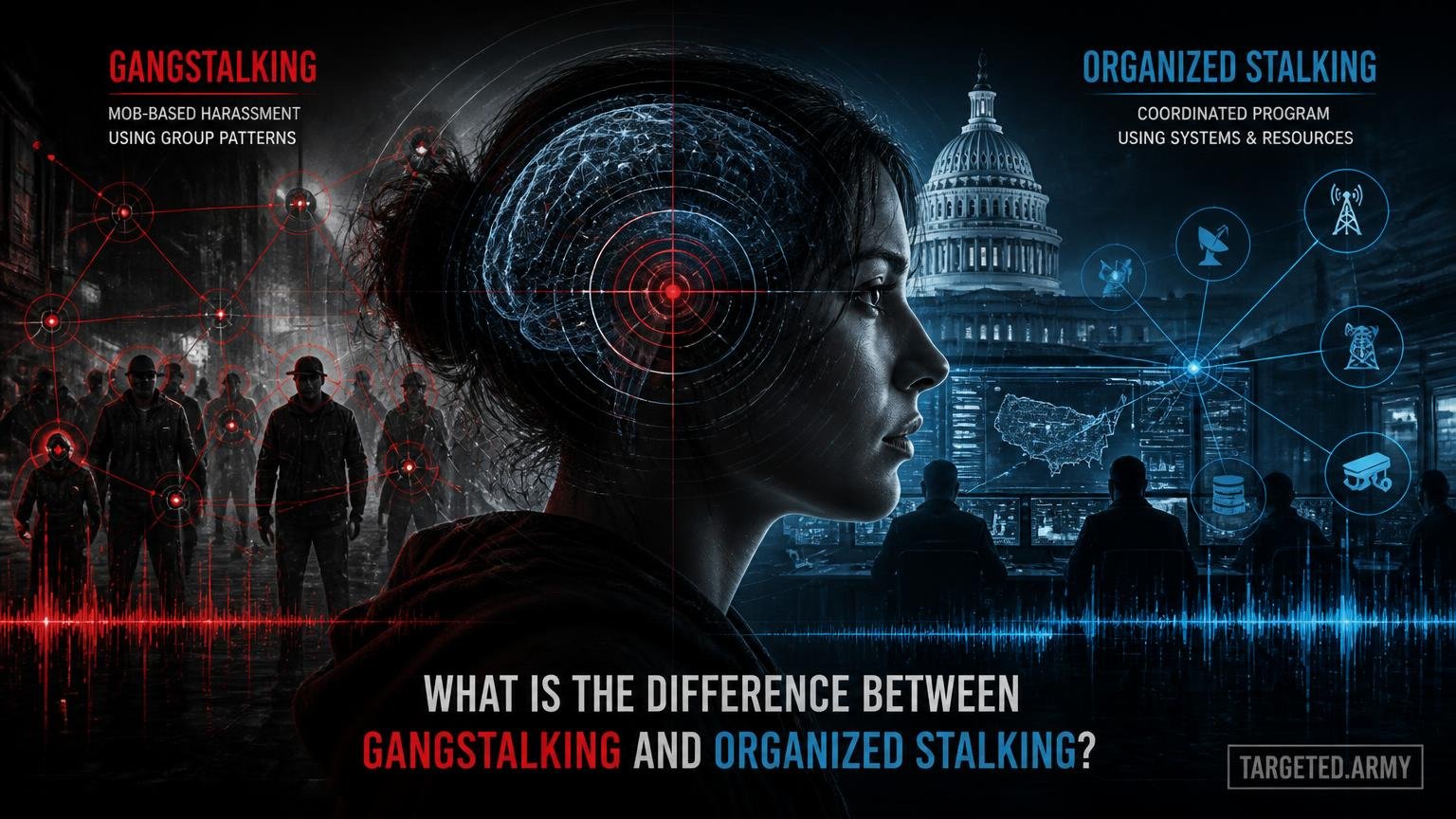
...While the terms are often used interchangeably, understanding the subtle distinction between "gangstalking" and "organized stalking" can help victims articulate the full scope of what they are experiencing.
Organized stalking is the broader, structural framework. It is the system itself—the coordination of resources, technology, and personnel. This includes the deployment of directed energy weapons (V2K), the manipulation of environmental electronics (smart meters, appliances, and vehicle computers), and the use of satellite-based systems (including 5G infrastructure) to monitor and influence neurological and physiological states. Organized stalking is the machinery behind the curtain.
Gangstalking, on the other hand, is the human component of that machinery. It is the visible, street-level layer of the operation. This includes the "neighborhood watch" of strangers who follow a target, the coworkers who whisper and plant false narratives, the drivers who slow down to leer, and the cashiers who make coded comments. Gangstalking is the performance of harassment—the psychological warfare designed to make the target feel isolated and paranoid. It relies on gaslighting, social sabotage, and the orchestrated denial that any of it is happening.
Think of it this way: organized stalking is the radio signal and the satellite beam. Gangstalking is the squad on the ground executing the orders that signal transmits.
For the community, this distinction matters because it validates two separate fronts of attack. The organized stalking front explains why technology can read our thoughts and induce physical pain. The gangstalking front explains why strangers suddenly seem scripted, why neighbors synchronize their activities, and why the world feels like a stage built against us. One is invisible, the other is in plain sight.
Together, they form a complete system of control—one that erodes health, reputation, and sanity with surgical precision. Recognizing both layers is the first step toward naming the enemy, and naming the enemy is the first step toward survival. We are not imagining the machine. We are living inside it.