Answer
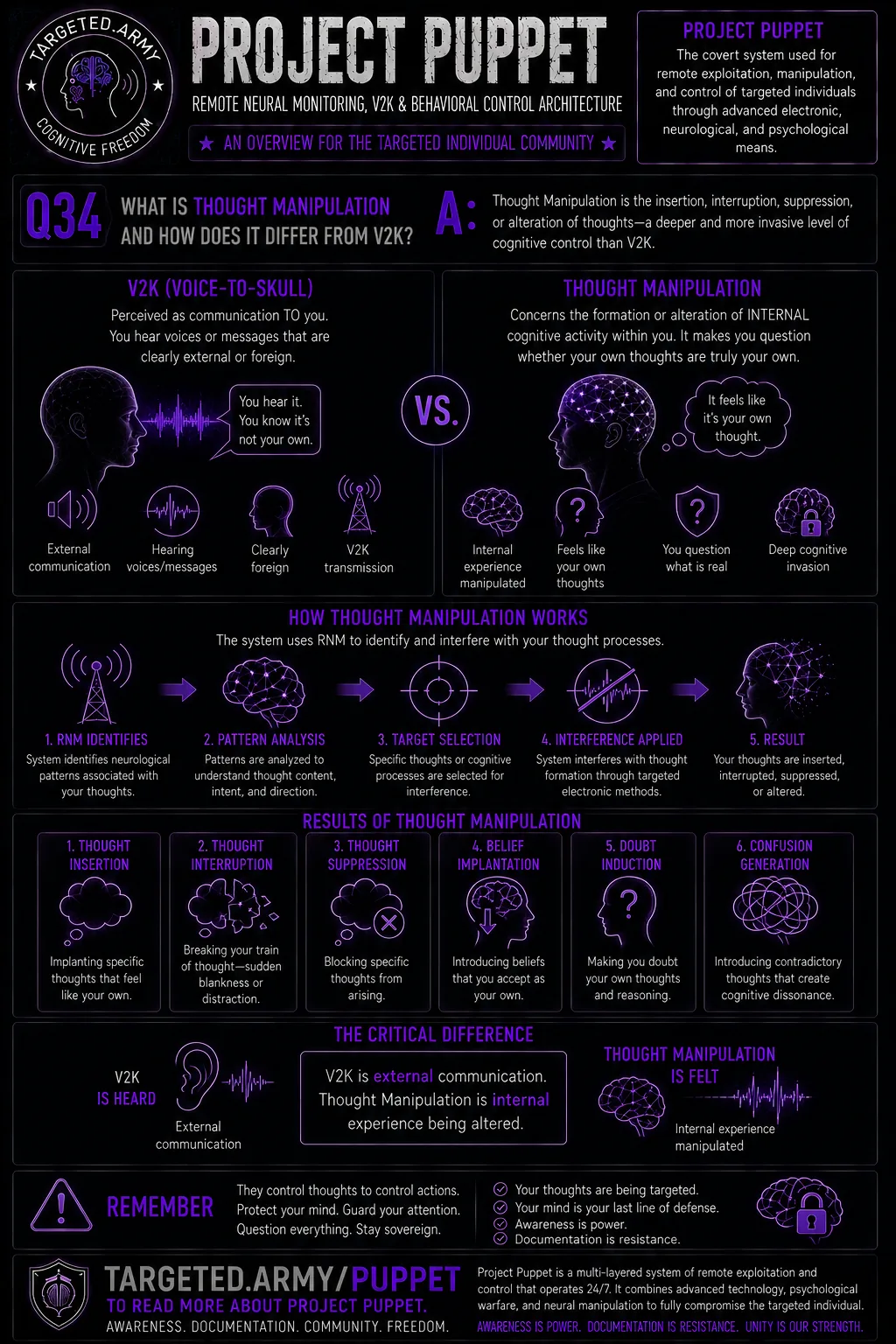
Thought Manipulation is the insertion, interruption, suppression, or alteration of thoughts—a deeper and more invasive level of cognitive control than V2K. V2K is perceived as communication to you—you hear voices or messages that are clearly external or foreign. Thought Manipulation concerns the formation or alteration of internal cognitive activity within you—it makes you question whether your own thoughts are truly your own. The system identifies the neurological patterns associated with your thoughts through RNM, then interferes with thought formation (breaking your train of thought), introduces foreign thoughts that feel like your own (thought insertion), blocks specific thoughts from forming (thought suppression), or modifies existing thoughts (changing their direction or content).
Thought Manipulation results in Thought Insertion (implanting specific thoughts that feel like your own), Thought Interruption (breaking your train of thought—sudden blankness or distraction), Thought Suppression (blocking specific thoughts from arising), Belief Implantation (introducing beliefs that you accept as your own), Doubt Induction (making you doubt your own thoughts and reasoning), and Confusion Generation (introducing contradictory thoughts that create cognitive dissonance).
The critical difference is that V2K is heard as external communication, while Thought Manipulation is experienced as your own internal experience being altered or controlled from outside.