Answer
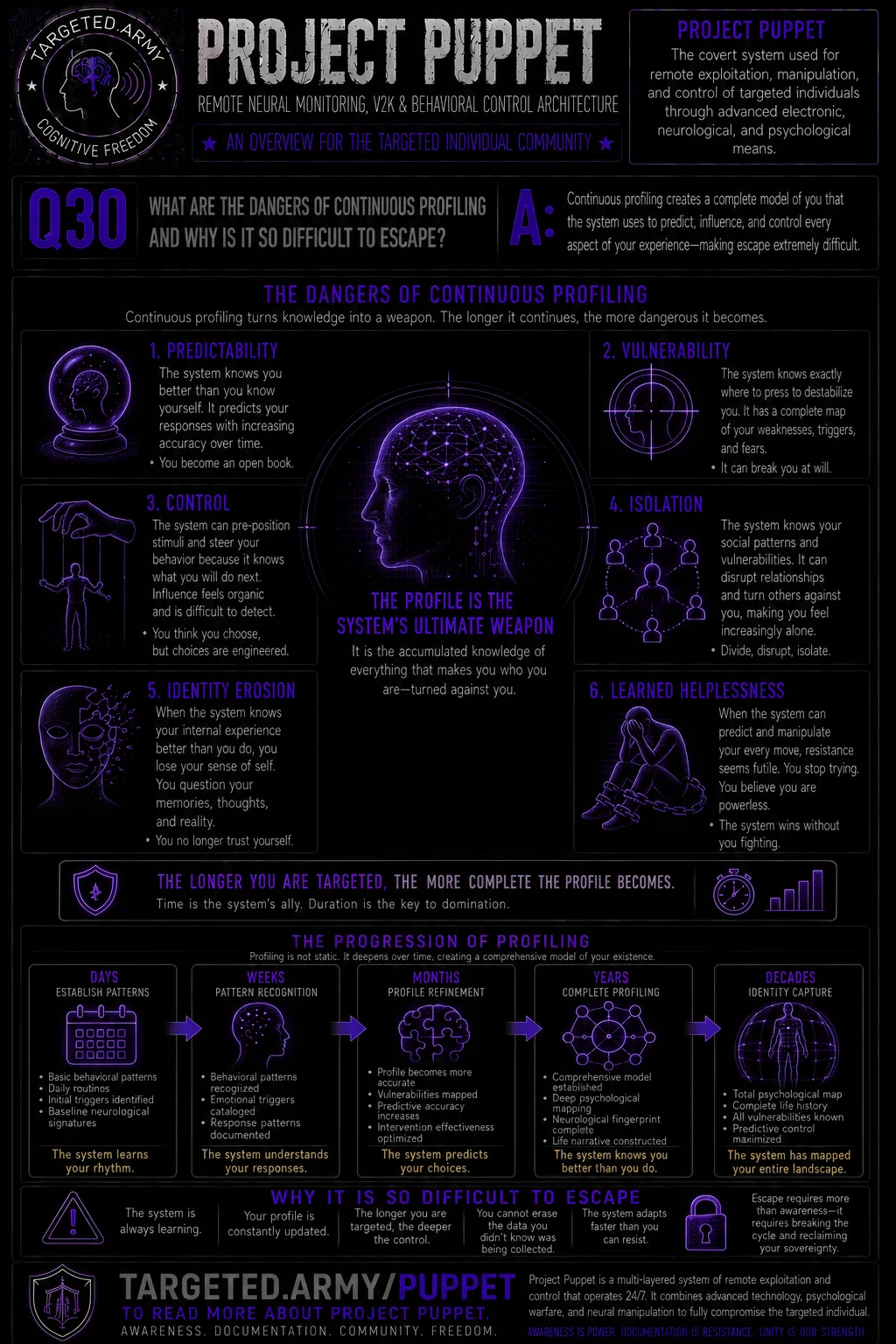
Continuous profiling creates several dangerous outcomes that make it difficult to escape. Predictability is the first danger—the system knows you better than you know yourself and can predict your responses with increasing accuracy over time. Vulnerability is the second danger—the system knows exactly where to press to destabilize you, with a complete map of your weaknesses, triggers, and fears. Control is the third danger—the system can pre-position stimuli and steer your behavior because it knows what you will do next, making the influence feel organic and difficult to detect.
Isolation is the fourth danger—the system can disrupt your relationships because it knows your social patterns and vulnerabilities, making you feel increasingly alone. Identity Erosion is the fifth danger—when the system knows your internal experience better than you do, you lose your sense of self and begin to question who you are. Learned Helplessness is the sixth danger—when the system can predict and manipulate your every move, resistance seems futile and you stop trying.
The profile is the system's ultimate weapon—it is the accumulated knowledge of everything that makes you who you are, turned against you. The longer you are targeted, the more complete the profile becomes. Days of monitoring establish basic patterns, weeks allow pattern recognition, months refine the profile, years create complete profiling, and decades result in identity capture—the system has mapped your entire psychological and neurological landscape.