Answer
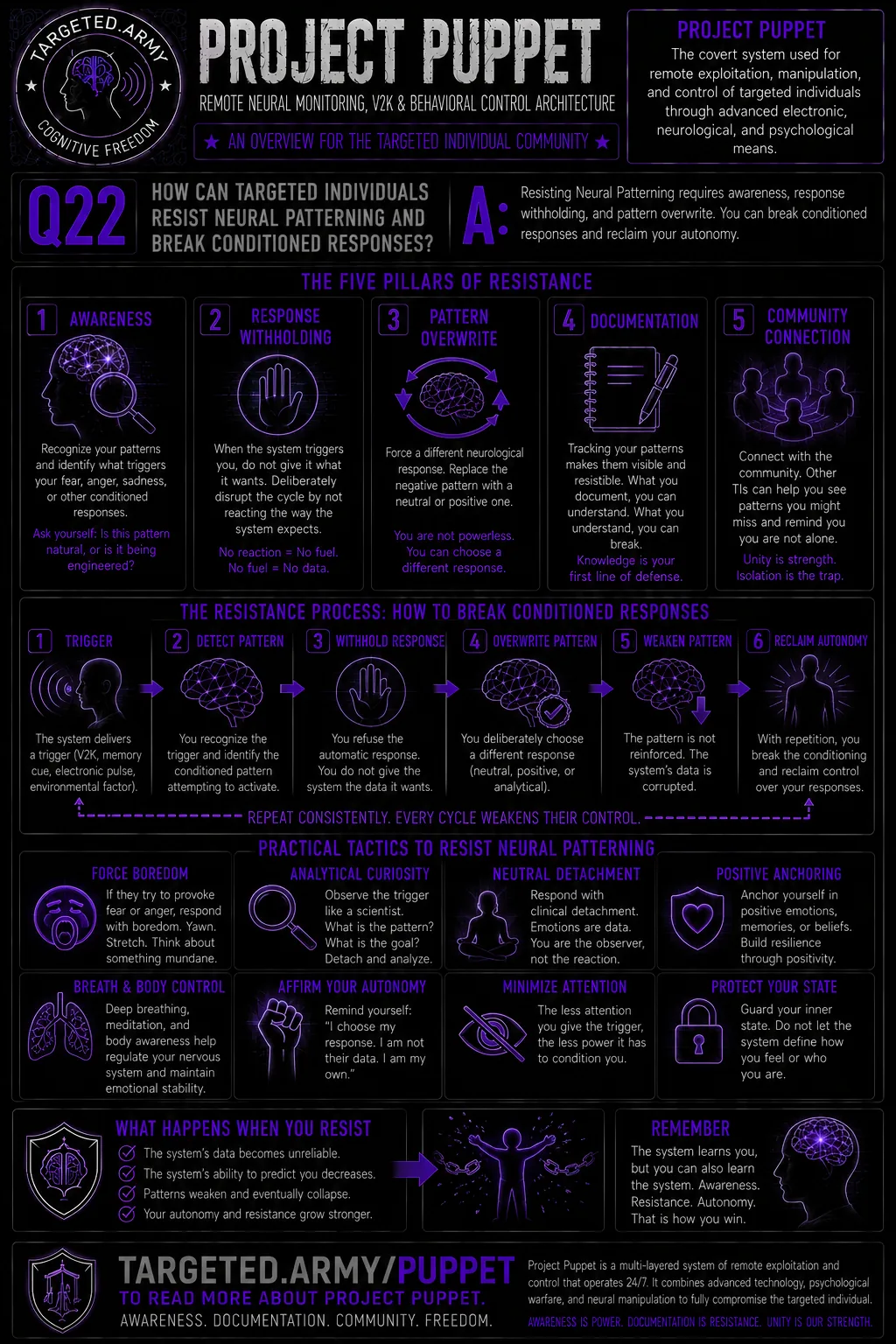
Resisting Neural Patterning requires awareness, response withholding, and pattern overwrite. The first line of defense is awareness—recognize your patterns and identify what triggers your fear, anger, sadness, or other conditioned responses. Notice when the same emotional response recurs in response to the same stimulus and ask yourself: Is this pattern natural, or is it being engineered? Then withhold the expected response—when the system triggers you, do not give it what it wants. Deliberately disrupt the cycle by not reacting the way the system expects.
If the system triggers fear, do not respond with fear—respond with boredom, analytical curiosity, or clinical detachment. Pattern overwrite is the next step—force a different neurological response. If the system wants fear, force boredom. If the system wants anger, force detachment. If the system wants sadness, force analytical curiosity. Replace the negative pattern with a neutral or positive one. Every time you do not react the way the system expects, you weaken the pattern.
Every time you give the system an emotional response it is not looking for, you corrupt its data. Every time you force a different response, you begin to reclaim your autonomy. Documentation also helps—tracking your patterns makes them visible and resistible. Connect with the community—other TIs can help you see patterns you might miss. The system learns you, but you can also learn the system—and when you do, you can begin to unlearn what it has taught you.