Answer
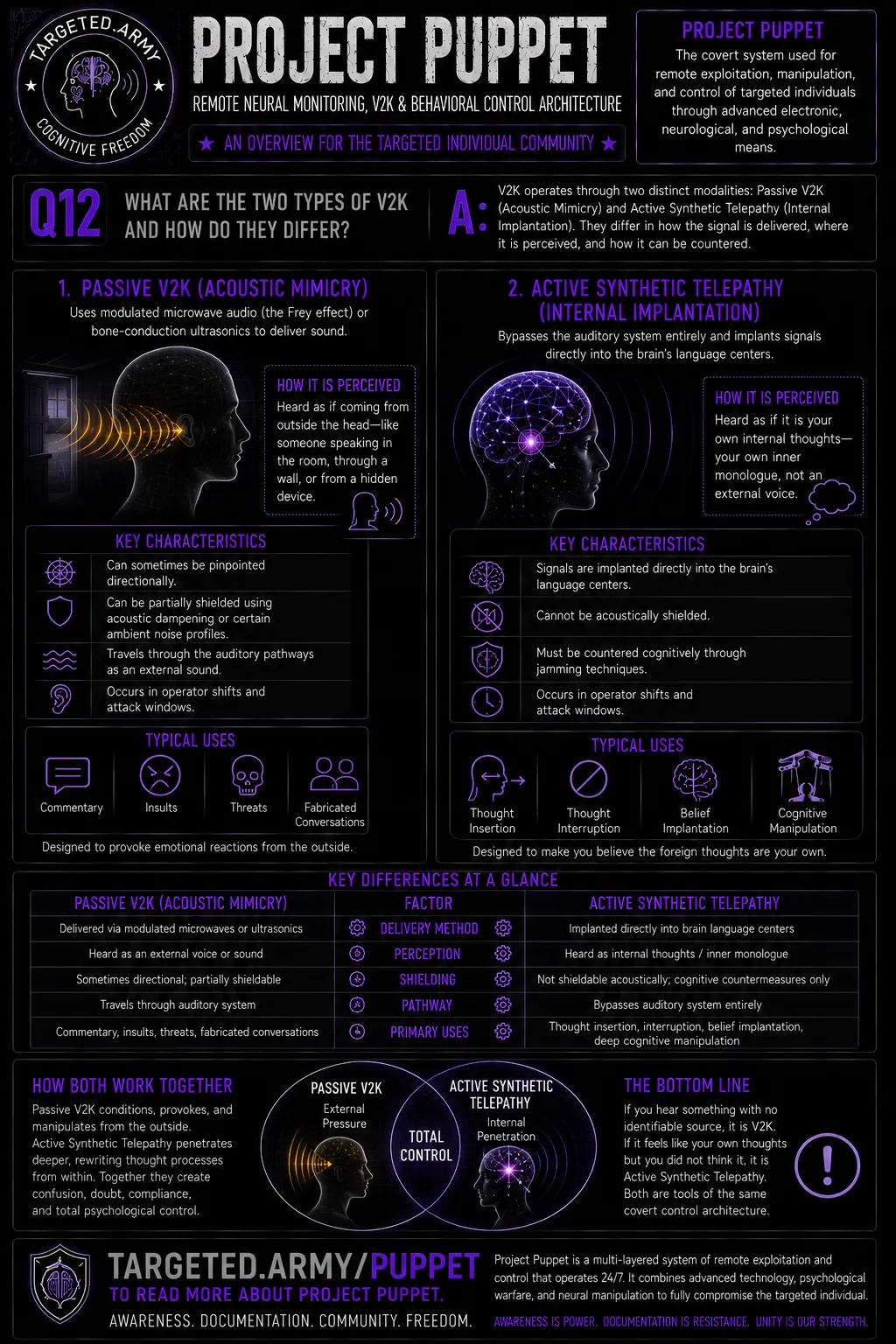
V2K operates through two distinct modalities: Passive V2K (Acoustic Mimicry) and Active Synthetic Telepathy (Internal Implantation). Passive V2K uses modulated microwave audio (the Frey effect) or bone-conduction ultrasonics to deliver sound. It is heard as if coming from outside the head—like someone speaking in the room, through a wall, or from a hidden device. Passive V2K can sometimes be pinpointed directionally and can be partially shielded using acoustic dampening or certain ambient noise profiles.
Active Synthetic Telepathy is a deeper level of V2K that bypasses the auditory system entirely and implants signals directly into the brain's language centers. These signals are interpreted as the individual's own internal thoughts—it is heard as if it is your own inner monologue, not an external voice. Active Synthetic Telepathy cannot be acoustically shielded; it must be countered cognitively through jamming techniques.
Passive V2K is typically used for commentary, insults, threats, and fabricated conversations designed to provoke emotional reactions from the outside. Active Synthetic Telepathy is typically used for thought insertion, thought interruption, belief implantation, and deeper cognitive manipulation designed to make you believe the foreign thoughts are your own.